| |
|
RMMJ
Rambam Maimonides Medical Journal
Rambam Health Care Campus 2026; 17(2): e0013.
ISSN: 2076-9172 Published online 2026 April 26. doi: 10.5041/RMMJ.10573
Why Is PaO2 Not Enough? Arterial Oxygen Content as a Prognostic Indicator in COPD Patients Stephany Ivonne Briones Alvarado, M.D.1,2,3* and Walther Iván Girón Matute, M.D.1,2,3 1Department of Respiratory Medicine, Gregorio Marañón General University Hospital, Madrid, Spain 2Faculty of Medicine, Complutense University of Madrid, Madrid, Spain 3Gregorio Marañón Health Research Institute (IiSGM), Madrid, Spain
Copyright © 2026 Briones Alvarado and Girón Matute
This is an open-access article. All its content, except where otherwise noted, is distributed under the terms of the Creative Commons Attribution License (http://creativecommons.org/licenses/by/3.0), which permits unrestricted use, distribution, and reproduction in any medium, provided the original work is properly cited. |
Background Chronic hypoxemia in patients with COPD is associated with increased morbidity and mortality. Although arterial partial pressure of oxygen (PaO 2) is widely used, it does not adequately reflect systemic oxygen transport. Arterial oxygen content (CaO 2) may provide a more comprehensive assessment.
Objective This study aimed to evaluate whether or not CaO 2 is a better predictor of mortality than PaO 2 in patients with COPD.
Methods This retrospective observational cohort study included 147 COPD patients aged ≥45 years. Patients were categorized according to CaO 2 levels (low, normal, high). Mortality at 1, 3, and 5 years was analyzed. Statistical methods included ROC curves, Kaplan–Meier survival analysis, and Cox regression models.
Results A total of 66 deaths (45.2%) occurred in the study cohort. Mortality was highest in the low CaO 2 group. The CaO 2 demonstrated better predictive performance than PaO 2 (AUC 0.73 versus 0.53, respectively). Low CaO 2 was associated with a 2.5-fold increased risk of mortality. Despite improvements in PaO 2 after long-term oxygen therapy, CaO 2 did not significantly change.
Conclusions The CaO 2 is a more informative marker of oxygen transport and mortality risk than PaO 2 in COPD patients. It should be considered a complementary parameter in clinical assessment.
Keywords: COPD, mortality, oxygen |
Uncorrected chronic hypoxemia in patients with chronic obstructive pulmonary disease (COPD) is associated with complications such as pulmonary hypertension, secondary polycythemia, systemic inflammation, and skeletal muscle dysfunction, all of which contribute to impaired quality of life and increased morbidity and mortality.1,2 While arterial partial pressure of oxygen (PaO2) is a commonly used indicator of alveolar ventilation, it does not adequately reflect the oxygen transport capacity, as the majority of oxygen is carried bound to hemoglobin (Hb).3 Arterial oxygen content (CaO2) is defined as the total amount of oxygen carried in arterial blood and is calculated as follows: CaO2 = (1.34 × Hb × SatO2) + (0.003 × PaO2), where Hb is the hemoglobin concentration, SatO2 is the arterial oxygen saturation, and PaO2 is the arterial partial pressure of oxygen. While PaO2 reflects only dissolved oxygen, CaO2 integrates both oxygen bound to hemoglobin and dissolved oxygen and therefore better represents systemic oxygen transport.3,4
Accordingly, CaO2, which depends on Hb concentration and saturation, provides a more comprehensive measure of systemic oxygen delivery.3,4 Anemia, even at mild levels, can significantly lower CaO2 and overwhelm compensatory mechanisms (e.g. increased cardiac output, oxygen extraction ratio) triggered by hypoxemia,5–8 compromising tissue oxygenation even with normal PaO2. Based on this physiological rationale, we hypothesized that CaO2 may serve as a more accurate predictor of mortality and response to long-term oxygen therapy (LTOT) in COPD patients, compared to PaO2 alone. |
This was a retrospective observational cohort study to evaluate mortality risk in COPD patients based on their CaO2 and PaO2 values. The study was conducted in a single tertiary-care hospital. A subanalysis stratified patients into three categories according to CaO2 levels: low (<16 mL/dL), normal (16–20 mL/dL), and high (>20 mL/dL). The CaO2 categories were defined a priori based on previously published reference values.5,6 All patients were initially evaluated in the outpatient setting, where baseline arterial blood gas measurements were obtained under stable clinical conditions and used for the primary analyses. In patients who subsequently initiated LTOT, follow-up arterial blood gases were available in a subset of cases during later hospital admissions for COPD exacerbations. These measurements were obtained as part of routine clinical care prior to hospital discharge, once clinical stability had been achieved. The LTOT prescription was based on standard clinical criteria and was not determined by CaO2. Patients aged ≥45 years with a confirmed diagnosis of COPD, seen in medical consults between 2018 and 2024, were eligible.
Exclusion criteria included poor adherence to inhaled therapy, need for chronic mechanical ventilation, multi-organ failure, interstitial lung disease, pulmonary embolism, significant cardiovascular disease, active malignancy, chronic kidney disease (glomerular filtration <30 mL/min), Child–Pugh B/C cirrhosis, hemoglobin <9 g/dL, or other conditions limiting life expectancy to less than one year.
Poor adherence was defined as documentation in the medical record of non-compliance with the prescribed inhaled treatment or LTOT, as assessed by the pulmonologist responsible for the treatment.
Mortality was measured throughout the study period, reporting survival at 1, 3, and 5 years. Mortality data were obtained from the hospital electronic medical record system, which is integrated with the regional health information system and linked to the national mortality registry. This allowed identification of deaths occurring both within and outside the hospital setting. Therefore, vital status was available for the entire cohort, and no significant loss to follow-up occurred during the study period.
Data were extracted from electronic medical records. Values for PaO2, Hb, and CaO2 were obtained from arterial blood gas analyses. Baseline arterial blood gas measurements were obtained while patients were breathing room air. In patients who subsequently initiated LTOT, a second arterial blood gas measurement was available in a subset of cases during later hospital admissions for COPD exacerbations. These follow-up measurements were obtained as part of routine clinical evaluation prior to hospital discharge, once patients had reached clinical stability and while receiving their prescribed LTOT. Arterial blood gases were analyzed using the GEM Premier 5000 system (Werfen, Bedford, MA, USA). Descriptive statistics included means, standard deviations (SD), frequencies, and percentages. Comparative analyses used Student’s t-test, ANOVA, and Fisher’s exact test. Diagnostic performance for mortality was assessed with ROC curves, with cutoffs defined using the Youden index. Kaplan–Meier survival analysis was used to estimate survival probabilities across CaO2 categories.
Time-to-event analyses were primarily performed using Cox proportional hazards regression models. Logistic regression analyses were conducted as complementary analyses to estimate odds ratios for mortality across CaO2 categories. Baseline characteristics were summarized by CaO2 group. Between-group imbalance was assessed using standardized mean differences (SMD), in accordance with recommendations for observational cohort studies. Hospitalization status (outpatient versus inpatient) was included as a covariate in the multivariable analyses. Statistical analysis was performed using SPSS (v25.0.0.0, Armonk, NY, USA); statistical significance was set at P≤0.05. |
After applying the inclusion and exclusion criteria, a total of 147 patients were included in the study. Baseline sociodemographic, clinical, and functional characteristics according to CaO2 category are shown in Table 1 and Table 2.  | Table 1 Baseline Sociodemographic and Clinical Characteristics of the Study Population (n=147). |
| Table 2 Spirometry Data, Number of Exacerbations, Number of Hospital Admissions, and Hb Values (n=147). |
During the study period, 66 deaths (45.2%) occurred among the 147 patients in the cohort. Mortality differed across CaO2 categories, with the highest mortality observed in the low CaO2 group and the lowest in the high CaO2 group (Table 3). | Table 3 Mortality According to Arterial Oxygen Content (CaO2) Category. |
A strong correlation was observed between Hb and CaO2 (r=0.858; P<0.01), while the correlation between PaO2 and CaO2 was weak (r=0.144; P<0.001). Older age was associated with an increased risk of low CaO2 (OR 1.1; 95% CI 1.017–1.088; P=0.030), increasing by approximately 60% per decade (OR 1.6; 95% CI 1.18–2.31). Chronic heart failure (CHF) was also associated with low CaO2 (OR 2.3; 95% CI 1.082–5.083; P=0.031), with an even higher risk in patients with heart failure and reduced ejection fraction (HFrEF) (OR 3.5; 95% CI 1.63–7.69; P=0.010), in contrast to those with heart failure and preserved ejection fraction (HFpEF) (OR 1.04; 95% CI 0.48–2.25; P=0.92). Arterial oxygen content (CaO2) showed better predictive ability for mortality than PaO2 (Figure 1), with an AUC of 0.73 (P<0.01; 95% CI 0.65–0.81) versus 0.53 for PaO2 (P=0.050; 95% CI 0.44–0.63), indicating that PaO2 was not a useful predictor in this cohort, whereas CaO2 demonstrated moderate predictive accuracy. 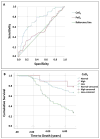 | Figure 1 Discriminatory Ability and Survival According to CaO2. |
The optimal cutoff point for CaO2 was ≤17.4 mL/dL, with a sensitivity of 79% (95% CI 67.9%–87.1%) and a specificity of 40% (95% CI 29.9%–50.9%). The positive predictive value (PPV) was 52.5% (95% CI 42.8%–61.9%), and the negative predictive value (NPV) was 69.6% (95% CI 55.2%–80.9%). In comparison, the cutoff point for PaO2 was ≤53.5 mmHg, with a sensitivity of 31%, specificity of 18%, PPV of 24.1%, and NPV of 23.3%. Patients with low CaO2 had a 2.5-fold higher risk of mortality (95% CI 1.516–4.271; P<0.01), adjusted for age, smoking, lung function, CHF, and years of COPD progression. These variables were selected for their potential role as confounding factors in the relationship between CaO2 and mortality. High CaO2 was associated with reduced mortality risk (OR 0.64; 95% CI 0.42–0.97; P=0.04). Survival at 1, 3, and 5 years was 93.3%, 71.1%, and 42.2% in the low CaO2 group; 98.9%, 90.2%, and 76.1% in the normal CaO2 group; and 100%, 97.9%, and 89% in the high CaO2 group, respectively. All patients included in the cohort were initially evaluated in the outpatient setting, and baseline arterial blood gases were obtained during stable clinical conditions. Therefore, the primary analyses were based on measurements obtained in ambulatory patients.
In a subset of patients receiving LTOT, pre-LTOT and post-LTOT arterial blood gases were compared. Post-LTOT measurements were obtained opportunistically during subsequent hospital admissions for COPD exacerbations, as arterial blood gases are routinely reassessed prior to hospital discharge once patients reach clinical stability. Importantly, hospitalization rates were comparable between CaO2 groups, with a mean of 1.5±2.65 hospitalizations in patients with low CaO2 and 1.1±1.72 hospitalizations in those with normal CaO2, suggesting that the availability of post-LTOT measurements was driven by routine clinical practice rather than systematic differences in disease severity or study design. Consequently, hospitalization data were not used to define the baseline cohort but only to allow a longitudinal comparison of CaO2 before and after initiation of LTOT in a subset of patients.
The LTOT was prescribed in 64 of 147 patients (43.8%). When stratified by CaO2 levels, 46.7% of patients with low CaO2, 40.2% of patients with normal CaO2, and none of patients with high CaO2 were receiving LTOT. The PaO2 increased significantly after LTOT, whereas CaO2 did not change significantly (Figure 2). Notably, 36.2% of patients maintained low CaO2 levels despite LTOT. 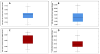 | Figure 2 Changes in PaO2 and CaO2 after Initiation of Home Oxygen Therapy. |
In an additional ROC analysis including hemoglobin alone, Hb showed a discriminatory ability for mortality comparable to that of CaO2, whereas PaO2 demonstrated poor predictive performance (Figure 3). These findings reinforce that markers reflecting oxygen transport capacity provide better prognostic discrimination than PaO2 alone. Although hemoglobin showed a similar discriminatory ability, CaO2 provides an integrated physiological measure combining hemoglobin concentration and arterial oxygenation, which may better reflect systemic oxygen delivery in COPD. 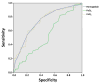 | Figure 3 ROC Analysis Comparing Predictive Performance of Hb, CaO2, and PaO2 for Mortality in Patients with COPD. |
To further evaluate the prognostic performance of oxygenation parameters, a Cox proportional hazards regression analysis was performed including age, Hb, PaO2, and CaO2 (Figure 4). Age was independently associated with mortality (HR 1.04; 95% CI 1.01–1.07; P=0.002). In contrast, PaO2 was not significantly associated with mortality (HR 1.01; 95% CI 0.98–1.03; P=0.61). Moreover, hemoglobin was not independently associated with the outcome when included in the same model (HR 0.99; 95% CI 0.71–1.38; P=0.95). Arterial oxygen content (CaO2) showed a protective trend, although this did not reach statistical significance in the multivariable model (HR 0.82; 95% CI 0.63–1.08; P=0.16). These findings suggest that PaO2 alone provides limited prognostic information for mortality in COPD patients, whereas parameters reflecting systemic oxygen transport, such as CaO2, may better capture the complex physiological determinants of oxygen delivery. 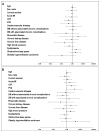 | Figure 4 Odds Ratios for All-cause Mortality. |
|
Our findings confirm that CaO2 provides better discrimination for mortality than PaO2. However, due to the modest specificity and predictive values observed, CaO2 should be interpreted as a complementary physiological marker rather than a standalone risk stratification tool. The low correlation between PaO2 and CaO2 highlights the limitations of PaO2 as an isolated marker of oxygenation. The cutoff point of 17.4 mL/dL appears clinically meaningful, with a high sensitivity (79%) for identifying patients at increased mortality risk. Nevertheless, due to its limited specificity, PPV, and NPV, CaO2 does not allow for complete risk stratification and must be interpreted in conjunction with other clinical and physiological markers. These observations reinforce the concept that indicators integrating oxygenation and oxygen transport, such as CaO2, offer a more meaningful clinical assessment than PaO2 alone in COPD. This may help identify patients who could potentially benefit from further evaluation for LTOT.
In our study, CaO2 was obtained from arterial blood gas analysis, which includes direct measurement of hemoglobin and arterial oxygen saturation, thus avoiding the inaccuracies associated with calculations based on pulse oximetry. This reinforces the prognostic validity of CaO2 compared to purely calculated estimates. Although the correlation between CaO2 and hemoglobin is physiologically predictable, our findings demonstrate that this physiological dependence is clinically relevant: CaO2, which integrates hemoglobin and oxygenation, demonstrated better discriminatory ability than PaO2, which only reflects dissolved oxygen.2–4 Therefore, two patients with identical hemoglobin levels may have markedly different CaO2 depending on their oxygenation status. The weak correlation between PaO2 and CaO2 observed in our cohort supports this concept. Although hemoglobin alone showed similar discriminatory ability in ROC analysis, CaO2 provides an integrated physiological measure combining hemoglobin concentration and arterial oxygenation.
Since CaO2 is mathematically derived from hemoglobin and oxygen saturation, including both variables in the same multivariable model would introduce collinearity. Therefore, CaO2 was used as the primary variable representing systemic oxygen transport. The risk of low CaO2 increases with age and in the presence of HFrEF. Although only age was significant in the univariate analysis, multivariate adjustment was performed to control for clinically relevant confounding factors. The emergence of CHF as an independent predictor indicates that its effect was masked in the univariate analysis by age and lung function. Aging causes loss of lung elasticity, increased dead space, and reduced circulating Hb, which decreases CaO2.9,10 In HFrEF, lower cardiac output compromises systemic oxygenation. In HFpEF, CaO2 may be normal at rest, but exercise-induced hypoxemia and reduced peripheral oxygen extraction during exertion have been documented. These differences could explain why in our study the risk of low CaO2 was higher in HFrEF than in HFpEF. Despite a significant improvement in PaO2 following the initiation of LTOT, CaO2 did not show any significant changes. Our data suggest that, even with LTOT, patients experiencing exacerbations are unable to achieve adequate CaO2 levels. This could imply that, even with normal PaO2 values, conventional oxygen therapy may be sufficient in the acute setting.
This discrepancy can be explained by the fact that CaO2 depends not only on arterial oxygenation, but also on Hb concentration and functionality, which are affected by chronic inflammation, anemia, COPD progression, advanced age, and comorbidities such as CHF,9,10 which may limit the overall response to LTOT. It is plausible that an improvement in PaO2 does not necessarily imply a greater effective supply of tissue oxygen.
Limitations The main limitations of this study include its retrospective and single-center design. In addition, the high CaO 2 group was small, and residual confounding related to unmeasured clinical variables cannot be excluded. These factors may limit the generalizability of the results and the ability to establish causal relationships. However, our data underscore the clinical relevance of CaO 2 as a potential prognostic marker in patients with COPD. Post-LTOT arterial blood gas measurements were available only in a subset of patients because follow-up measurements were obtained opportunistically during subsequent hospital admissions. Another potential consideration is that LTOT was prescribed according to established clinical criteria based primarily on PaO 2 rather than CaO 2.
Therefore, treatment decisions were not influenced by CaO2 levels. This reduces the likelihood that the observed association between CaO2 and mortality was driven by treatment allocation. In addition, the proportion of patients receiving LTOT was similar across CaO2 categories, suggesting that differences in outcomes were unlikely to be explained solely by variations in oxygen therapy prescription. |
Our findings indicate that CaO2 may provide a more physiologically meaningful measure of oxygen transport and mortality risk than PaO2 alone in patients with COPD. Prospective, multicenter studies are needed to validate these results and further investigate the prognostic value of CaO2. |
| CaO2 |
arterial oxygen content |
| COPD |
chronic obstructive pulmonary disease |
| Hb |
hemoglobin |
| HFpEF |
heart failure and preserved ejection fraction |
| HFrEF |
heart failure and reduced ejection fraction |
| LTOT |
long-term oxygen therapy |
| PaO2 |
arterial partial pressure of oxygen |
| SatO2 |
arterial oxygen saturation |
|
|
2. Kent BD, Mitchell PD, McNicholas WT. Hypoxemia in patients with COPD: cause, effects, and disease progression. Int J Chron Obstruct Pulmon Dis 2011; 6:199–208. https://doi.org/10.2147/COPD.S10611. 3. Collins JA, Rudenski A, Gibson J, Howard L, O’Driscoll R. Relating oxygen partial pressure, saturation and content: the haemoglobin-oxygen dissociation curve. Breathe (Sheff) 2015;11:194–201. https://doi.org/10.1183/20734735.001415. 4. Dominelli PB, Baker SE, Wiggins CC, et al. Dissociating the effects of oxygen pressure and content on the control of breathing and acute hypoxic response. J Appl Physiol 2019;127:1622–31. https://doi.org/10.1152/japplphysiol.00569.2019. 5. Santhirapala V, Williams LC, Tighe HC, Jackson JE, Shovlin CL. Arterial oxygen content is precisely maintained by graded erythrocytotic responses in settings of high/normal serum iron levels, and predicts exercise capacity: an observational study of hypoxaemic patients with pulmonary arteriovenous malformations. PLoS One 2014;9:e90777. https://doi.org/10.1055/s-0034-1378089. 6. Warnke Ch, Bollmann T, Ittermann T, et al. Referenzwerte für den arteriellen Sauerstoffgehalt [Reference values for arterial oxygen content]. Pneumologie 2014;68:788–92. [German] https://doi.org/10.1055/s-0034-1378089. 7. Heindl S, Lehnert M, Criée CP, Hasenfuss G, Andreas S. Marked sympathetic activation in patients with chronic respiratory failure. Am J Respir Crit Care Med 2001;164:597–601. https://doi.org/10.1164/ajrccm.164.4.2007085. 8. Ghosh S, Brahmachari RK, Ghosh S, Das Choudhury S, Ghosh K. Assessment of initial oxygenation levels of chronic obstructive pulmonary disease (COPD) and their impact on basis and vital tools: retrospective cohort study from India. Cureus 2024;16:e75470. https://doi.org/10.7759/cureus.75470. 9. Guralnik JM, Eisenstaedt RS, Ferrucci L, Klein HG, Woodman RC. Prevalence of anemia in persons 65 years and older in the United States: evidence for a high rate of unexplained anemia. Blood 2004;104: 2263–8. https://doi.org/10.1182/blood-2004-05-1812. 10. Omar M, Omote K, Sorimachi H, et al. Hypoxaemia in patients with heart failure and preserved ejection fraction. Eur J Heart Fail 2023;25:1593–603. https://doi.org/10.1002/ejhf.2930. |
